

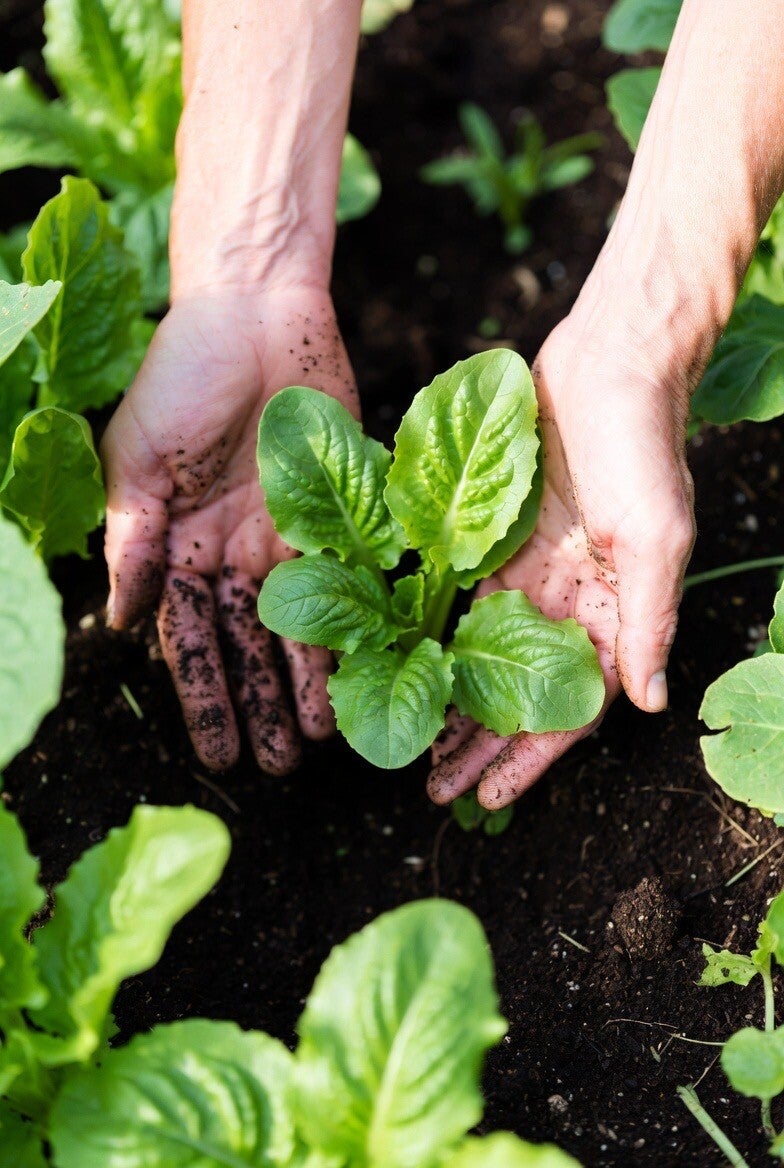
Regenerative Agriculture • Community Resilience • Food Sovereignty • Ecological Education • Sustainable Farming
At Common Ground on Red Mud Ranch, our purpose is to teach and live by three core principles that we believe are essential to building a healthier, more sovereign future for both people and the land.
Reconnect with the land
We believe resilience begins with remembering our relationship to the natural world. Through ecological stewardship, regenerative practices, food cultivation, herbalism, mycology, seasonal awareness, and hands-on learning, we help people reconnect with the rhythms that sustain life. By understanding soil, water, native ecosystems, and local resources, we become less dependent on fragile systems and more capable of caring for ourselves, each other, and the generations that follow.
Strengthen community
A strong future is built through meaningful connection and shared responsibility. We aim to create spaces where people can gather, learn, teach, collaborate, and support one another across different backgrounds and skill sets. Whether through workshops, land projects, shared meals, art, music, or restorative conversations, we believe community resilience grows through reciprocity, trust, and the understanding that none of us are meant to do this alone.
Create sustainable systems
We are committed to developing practical, grounded systems that support long-term wellbeing instead of short-term extraction. This includes regenerative land management, ecological education, diversified livelihoods, local collaboration, and creating spaces that encourage creativity, healing, and stewardship. We believe sustainable systems should nourish both human potential and the ecosystems we depend on, while remaining adaptable, locally rooted, and built to endure.
At its heart, Common Ground at Red Mud Ranch exists to help restore connection — to the land, to community, and to a more intentional way of living.
Rent Workshop Space Along Clear Creek on a Restoring Century Farm

The PERFECT Spot
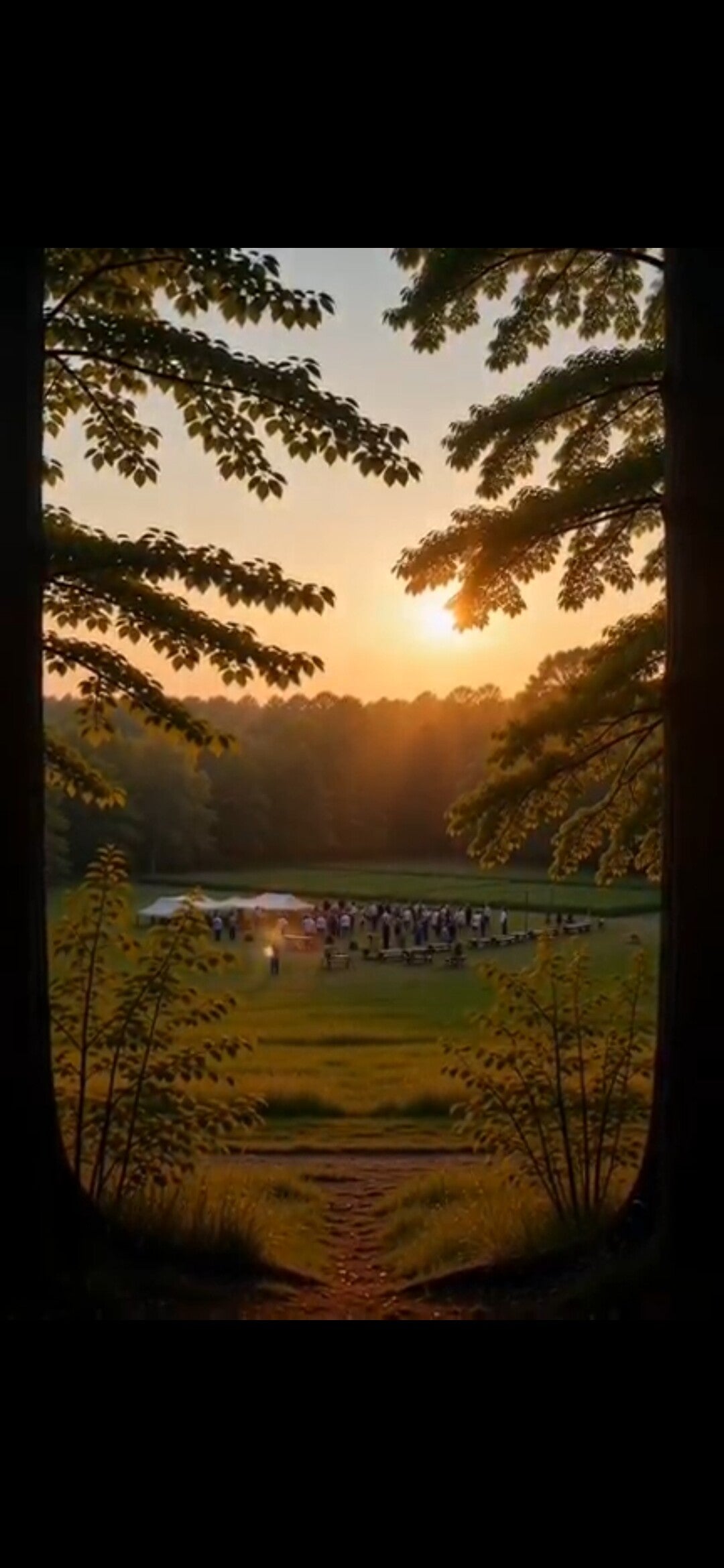
Host intimate nature-based workshops on the private lower 7 acres of Red Mud Ranch in Oregon City. Meadow, forest edge, and areas right along Clear Creek — just 25–30 minutes from Portland.
This 88-acre century farm has hosted beloved events like Stringbender Festival and Mojo Family Fest. Now it’s gently being restored while opening for smaller, meaningful gatherings at a human pace.
Not when it’s done. Now, while it’s becoming.
Private Secluded Workshop Space Along Clear Creek
Rent the completely private lower 7 acres (meadow + forest edge + creek) on our restoring 88-acre century farm in Oregon City. Perfect for intimate forest bathing, foraging, nervous system regulation, and small group workshops. 25–30 minutes from Portland.
Food For Thought
The Slow Death of Shared Reality
Something shifted over the last few years, and most people can feel it even if they can’t quite explain it.
We used to argue about what things meant. Now we argue about whether anything is real at all.
AI can now generate voices, videos, photos, articles, conversations-even entire personalities-that are nearly impossible to distinguish from reality. Politicians dismiss real footage as fake. Fake footage spreads faster than truth ever could. Algorithms push outrage and emotional manipulation because it keeps people scrolling, clicking, consuming.
After a while, people stop trying to sort truth from fiction. They just become numb.
And honestly, that may be the most dangerous part of all.
This isn’t some dramatic movie about robots taking over the world. It’s quieter than that. It’s the erosion of trust itself. Trust in media. Trust in institutions. Trust in each other. Even trust in our own eyes.
At the same time, we’ve handed nearly every physical system we depend on over to automation, software, and centralized control. Food distribution, agriculture, medicine, communication, banking-everything now runs through layers of algorithms and corporate infrastructure that very few people actually understand.
Even farming has changed.
Modern tractors and equipment are packed with AI-driven diagnostics, locked software systems, GPS integrations, and subscription-based features. Farmers can spend hundreds of thousands on equipment they legally own, yet still can’t repair it themselves without dealer authorization or proprietary software access. A machine breaks down during harvest season and suddenly you’re waiting on a technician with a laptop and a corporate login code just to turn your own equipment back on.
That’s not innovation. That’s dependency masquerading as progress.
We traded resilience for convenience.
We traded practical knowledge for automation.
We traded local systems we could repair with our own hands for fragile global systems nobody can touch.
Now people are starting to realize how dangerous that bargain really was.
Because when systems fail-even briefly-the cracks show immediately. Empty shelves. Delayed medicine. Broken supply chains. Entire communities dependent on technology they neither control nor understand.
And underneath all of it is a deeper problem: most people no longer know how to produce anything real for themselves.
That’s why the answer isn’t more digital immersion. It’s reconnection to physical reality.
Real food.
Real skills.
Real community.
Real land.
Real conversations.
Real trade.
You cannot deepfake a garden.
You cannot algorithmically generate clean water, healthy soil, or trustworthy neighbors.
The people who are going to weather the coming decades best are not necessarily the wealthiest or the most technologically advanced. They’re the ones rebuilding tangible resilience.
People learning how to grow food again instead of relying entirely on industrial agriculture.
People restoring old gravity-fed water systems instead of depending completely on “smart infrastructure.”
People learning herbal medicine, preservation, seed saving, foraging, carpentry, animal husbandry, mechanical repair—skills our grandparents considered normal.
People building local markets, small community gatherings, farm stands, workshops, and face-to-face relationships that don’t disappear when a platform changes its terms of service.
Places like Common Ground matter because they create something increasingly rare: unmediated human connection.
Not optimized engagement.
Not monetized attention.
Not synthetic identity.
Just real people, standing on real ground, sharing knowledge, food, stories, and presence.
And maybe that’s where this all turns.
Not through some massive revolution or technological collapse, but through millions of people quietly remembering that human beings lived for thousands of years without subscriptions, algorithms, and constant digital mediation.
The future may belong to those who can still repair things.
Grow things.
Build things.
Preserve things.
And most importantly, trust what is directly in front of them.
The digital world is going to keep getting louder, stranger, and more artificial.
So plant something.
Learn something useful.
Know your neighbors.
Build systems that still function when the signal disappears.
Because reality-shared, physical, tangible reality-is becoming one of the most valuable things left.